Badrinath Masterplan
INI Design Studio

Short description
Badrinath Masterplan Development: Ensuring Cultural Perpetuity within Fragile Ecosystems through Integrated Sustainable Development Strategies:
Nestled in the Himalayan ranges of Uttarakhand, Badrinath holds profound spiritual significance as one of the Char Dham pilgrimage sites for Hindus. Anchored by the ancient Badrinarayan Temple, dedicated to Lord Vishnu and established by Adi Guru Shankaracharya, this hill-town attracts millions of devotees annually. However, unchecked urbanization, inadequate infrastructure, and environmental degradation have strained its cultural and ecological fabric, calling for transformative intervention.
The Badrinath Masterplan Development project, initiated by the Uttarakhand State Government, aims to preserve and enhance this spiritual hub while ensuring sustainability and resilience.
Major Challenges in the Project:
The redevelopment, spanning 85.06 hectares, faced major challenges. The rugged Himalayan terrain, non-motorable zones, and snowbound conditions for half the year required innovative solutions. Additionally, monsoon flooding, landslides, and erosion posed persistent threats, necessitating robust disaster mitigation and environmental safeguards. Specialized vehicles, local expertise, and traditional practices were employed to overcome logistical and climatic constraints.
Reimagining the Temple and Town while Enhancing Connectivity and the Riverfront:
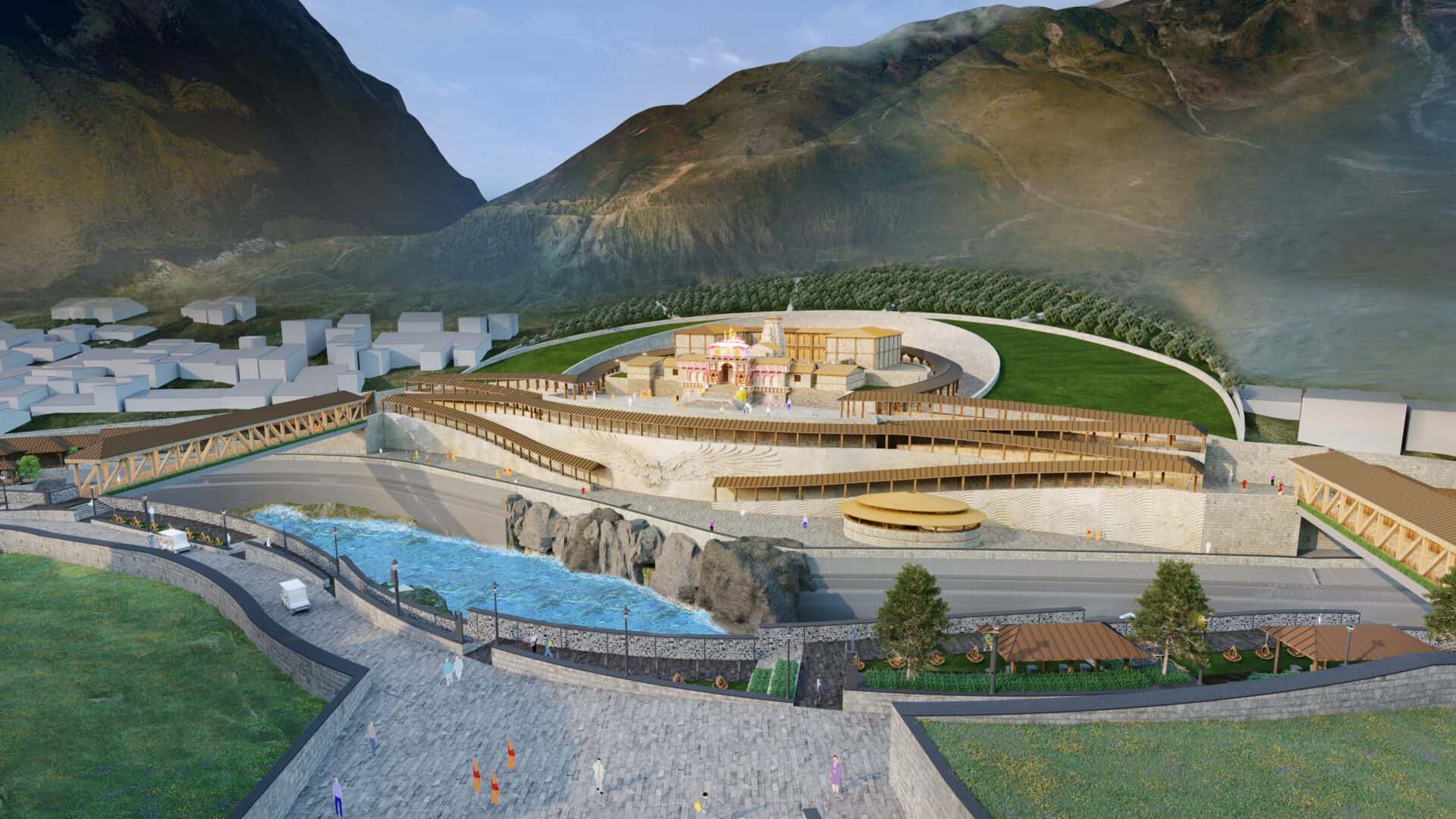
The masterplan focuses on revitalizing the temple precincts, which had been obscured by decades of haphazard construction. Obstructive structures were removed and relocated, creating open spaces for pilgrims. An elevated platform now highlights the temple’s splendor, restoring its prominence and establishing a seamless spiritual and physical connection to the town across the Alakananda River. Ramps ensure accessibility for differently-abled pilgrims.
Badrinath’s urban infrastructure has been reorganized to address congestion, with upgraded roads improving resilience and navigability. Pedestrian pathways link key nodes, including Shesh-Netra Lake and newly developed landscaped parks, which enhance the town’s aesthetics and serve as inviting spaces. Ample parking and improved amenities, such as water supply, sanitation, and waste management, accommodate the growing influx of pilgrims and tourists.
The Alakananda Riverfront has been transformed into a vibrant, resilient space. Strengthened ghats withstand flooding and erosion, providing safe access for spiritual rituals. Connectivity to nearby pilgrim sites like Tapt Kund, Brahma Kapal, and Mana Village has been improved through bridges and pathways integrating these sites with the core town.
A Model for Environmental and Cultural Sustainability of Hill Towns:
The masterplan uses seismic-resilient construction techniques and locally sourced materials to minimize environmental impact in this fragile ecosystem. Byelaws and development guidelines ensure that future growth aligns with ecological and cultural contexts, preventing reckless construction. Flood and erosion control measures protect the town from natural disasters. Green spaces and improved waste management systems enhance conservation, while vernacular construction techniques preserve the region’s natural heritage.
A key aspect of the project’s success is involving residents in the planning, which fostered ownership and pride, while employment opportunities have revitalized the local economy, promoting sustainable growth.
Visionary Evolution of the Masterplan:
The Masterplan’s vision is rooted in the principle of balancing the social, economic, environmental, and spiritual dimensions, transforming Badrinath into a smart and sustainable hill town. The plan is divided into three key zones:
1. Mandir Parisar (Temple Precinct):
o Issues such as overcrowding, lack of queue management, and non-disabled-friendly facilities were identified, and addressed through interventions like the creation of a vehicle-free zone, an integrated Temple Precinct, and a 75m no-build buffer around the temple.
o Facilities like covered ramps, all-weather shelters, and drinking water stations enhance pilgrims' experience.
2. Waterfront and Public Realm:
o The drying lakes and littered riverfronts were rejuvenated with promenades, landscaped parks, and public utilities like gardens.
o Iconic spaces like the Tourist Arrival Plaza and Amrit Sarovar contribute to the town’s improved aesthetic and functional quality.
3. Street Network and Connectivity:
o Narrow roads, unorganized streets, and inadequate transit facilities were streamlined.
o New infrastructure, such as a one-way loop road, heliport, and transit hostel campus, improves connectivity.
o Social infrastructure, including a hospital and tourist interpretation center, ensures the town meets diverse visitor needs.
Bringing Back the Glory of Badrinath:
Historically, the temple’s prominence was shaped by Shri Adi Guru Shankaracharya’s vision, promoting unity and spiritual growth. This legacy is honored in the Masterplan through the meticulous restoration of temple precincts, use of traditional materials, and inclusion of features like Badri Van and Vaikunth Dwaar that echo the town’s historical and spiritual ethos.
By rejuvenating public spaces, reinforcing disaster resilience, and modernizing infrastructure, the Masterplan exemplifies holistic planning that harmonizes tradition with modernity. By preserving its cultural and spiritual essence while ensuring ecological resilience, Badrinath serves as a blueprint for sustainable hill town developments across India.
Entry details