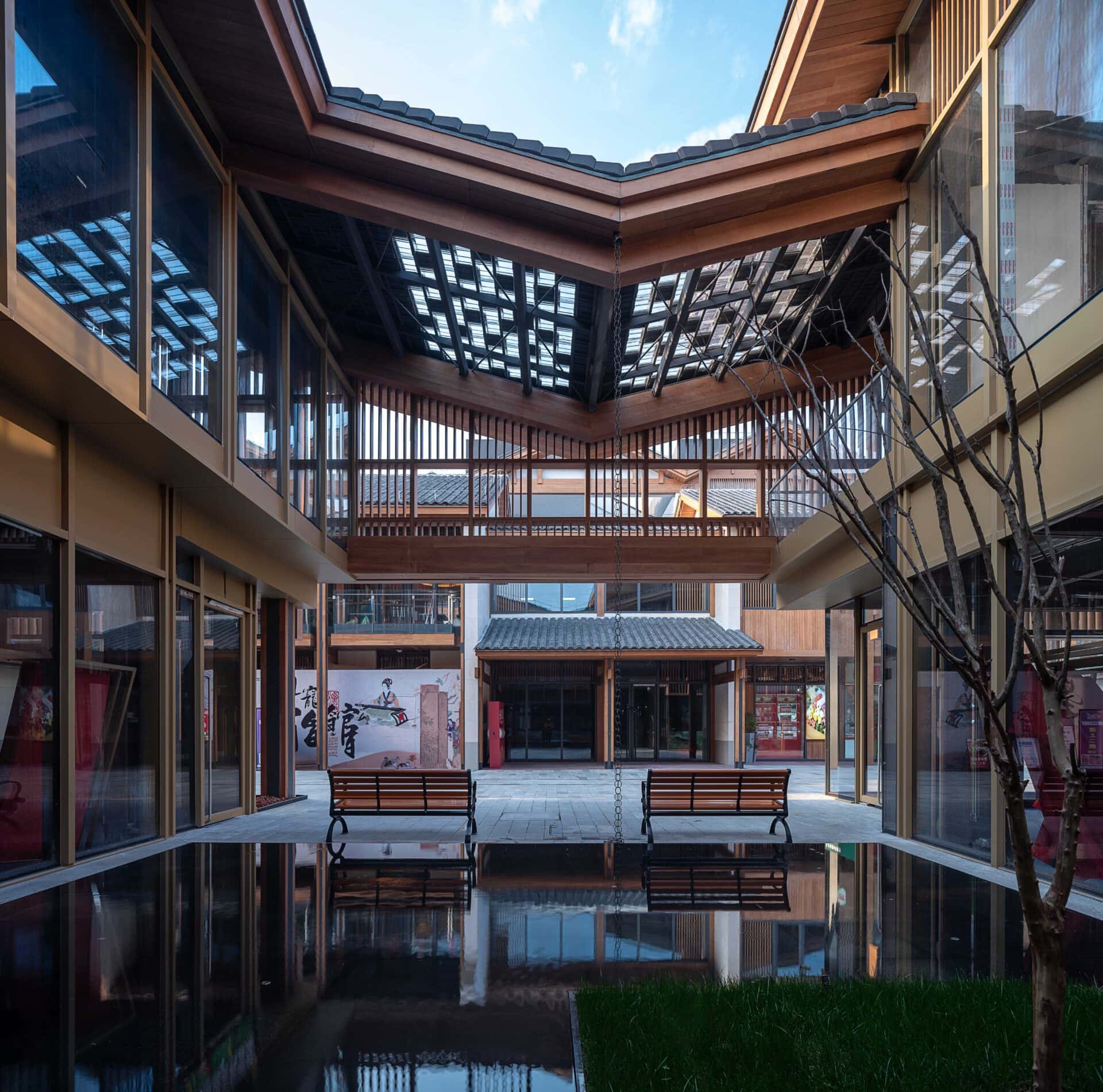
Shuinan Riverfront Cultural District
Beijing AN-Design Architects CO.,LTD.

Short description
Reviving a Forgotten Waterfront Area
The Shuinan Riverfront Cultural District is a transformative urban regeneration project that reclaims a once-vital civic and commercial hub along Shangrao’s historic riverfront in Jiangxi Province, China. Grounded in a memory-led design philosophy, the project responds to decades of rapid urbanization that had fractured the area’s spatial integrity and eroded its unique cultural identity. Once a bustling marketplace and social gathering point at the confluence of two rivers, Shuinan had become an underutilized and disconnected space. This project sought to recover its historic vibrancy while addressing the needs of a contemporary urban environment.
A Memory-Led Approach to Urban Form
Instead of yielding to the pressures of high-density development, the design team prioritized historical continuity and low-rise architectural forms. The riverside landscape was carefully restored to bring back ecological richness and spatial openness, while the historic street grid was reconnected to revive pedestrian flow and urban coherence. Central to this vision is the reinterpretation of local architectural memory. Drawing from historical photographs and oral histories, the design team identified the district’s distinctive roofscape and informal urban fabric as key visual and emotional anchors. These were abstracted and reintroduced through a staggered skyline and varied building forms, offering a harmonious integration between old and new.
Anchoring Civic Identity Through Urban Space
At the heart of the district lies Shuinan Square, a civic landmark that has long held symbolic significance in the collective memory of Shangrao’s residents. Its spatial hierarchy and visibility have been preserved through strategic height controls and a sensitive urban layout. The surrounding public realm was reshaped through the addition of riverside promenades, human-scaled pedestrian streets, and cultural plazas that support both everyday use and community festivals. The integration of these elements fosters continuous engagement between the city and its waterfront.
Reconstructing Memory Through Craft and Culture
A key innovation in the project is the use of "memory anchors"—historic spaces such as the traditional opera stage plaza and sculpture square—that have been meticulously reconstructed using traditional building techniques like timber joinery and stone paving. These elements serve as tactile links to the past and elevate the cultural richness of the district. They also demonstrate a model for embedding intangible heritage into a commercially viable urban setting, where authenticity becomes a driver of spatial identity and economic vitality.
Blending Local Vernacular with Contemporary Design
The district’s commercial architecture reflects this dual ambition. Street-level façades feature vernacular details and grey spaces that echo local courtyard typologies, while interior courtyards adopt minimalist forms to create a quiet contrast. This interplay of materials, forms, and spatial rhythms creates a layered urban experience that is both locally rooted and forward-looking.
A New Civic and Commercial Core
Since its completion, the Shuinan Riverfront Cultural District has rapidly emerged as one of Shangrao’s most popular destinations, attracting residents and visitors alike. Within a year, the area transitioned from an overlooked void into the city’s leading commercial and cultural zone. The project stands as a compelling example of how urban design can leverage historical memory not as a constraint but as an opportunity—to foster place-based identity, promote sustainable public life, and enhance urban resilience. It illustrates how waterfront regeneration, when grounded in authentic local narratives and human-scale design, can drive meaningful and lasting urban transformation.
Entry details